
Aluminum is often the better deck railing choice if you want to avoid the recurring finishing work associated with painted or stained wood. Wood can be the better fit when natural texture, a particular architectural detail or a custom-built appearance is your priority. The useful comparison is the complete railing, its installation and the care you are willing to provide—not a claim that one material wins every project.
When comparing aluminum vs wood deck railing, separate three decisions: what you want the railing to look like, what the finished installation will involve and what ownership will require afterward. A lower materials total does not necessarily mean a lower completed-project cost. Equally, lower maintenance does not establish a guaranteed financial payback.
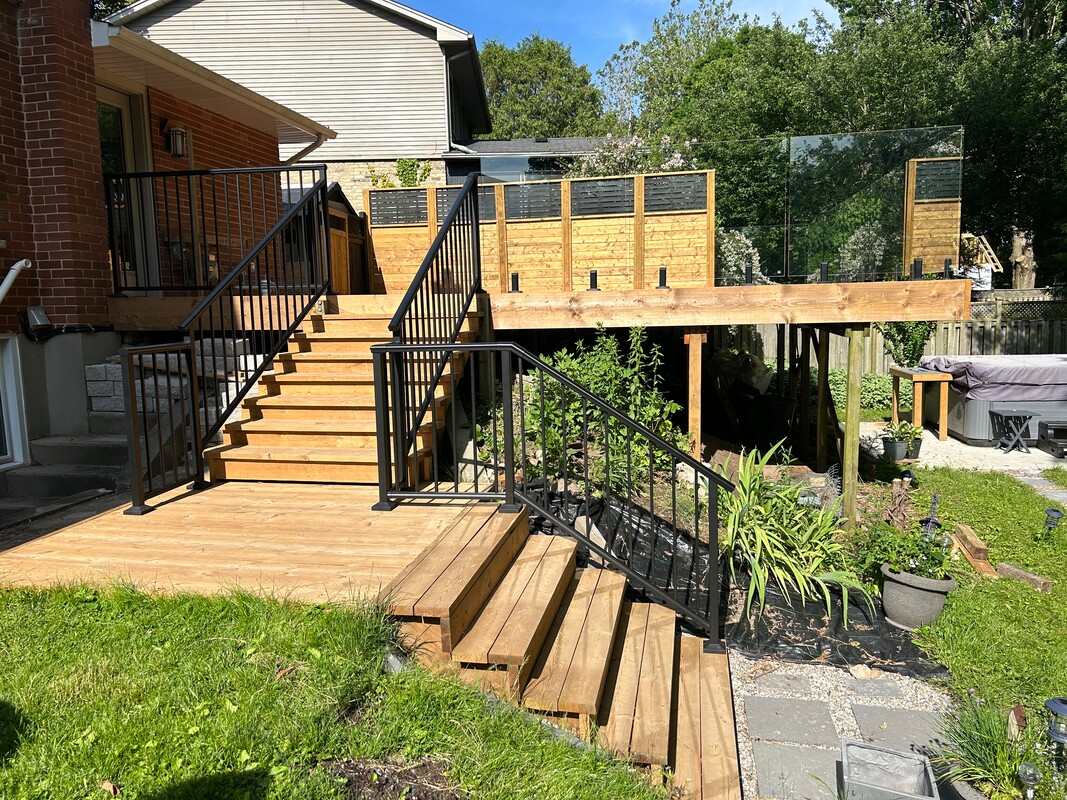
For homeowners who want a coated metal appearance and less refinishing work, aluminum is a strong option. For those who value wood grain and are comfortable maintaining the selected finish, wood remains worth considering. Compare the actual designs, support conditions and quotations before deciding.
This guide compares the materials to help you make that decision. Ontario Deck Railing’s product pages focus on aluminum and glass systems; the wood discussion is general comparison information, rather than a promise that ODR supplies wood railings.
Aluminum vs wood deck railings at a glance
Use this table to identify your priorities before comparing individual products. “Aluminum” does not describe every coating or component, and “wood” does not describe every species, finish or construction method.
| Decision | Aluminum railing | Wood railing |
|---|---|---|
| Appearance | Defined metal profiles, picket patterns and system-specific coated finishes. | Natural grain, painted or stained finishes and opportunities for custom detailing. |
| Routine care | Cleaning and inspection of the finish, connections and supporting surfaces. | Cleaning and inspection, plus care appropriate to the wood and any applied finish. |
| Refinishing | A factory-coated system avoids the routine wood-staining cycle; coating damage still needs advice. | Painted or stained surfaces require condition-based maintenance and eventual recoating. |
| Initial cost | Depends on the system, layout, mounting, stairs and installation scope. | Depends on the lumber, design, fastening, preparation, finishing and installation scope. |
| Long-term value | Consider the care workload and the suitability of the chosen design. | Consider finish upkeep, repair arrangements and how much you value the wood appearance. |
| Replacement project | Existing structure and attachment conditions need assessment. | Existing structure and attachment conditions also need assessment. |
Compare finished-project cost, not just the materials
A meaningful cost comparison starts with one drawing and two clearly described alternatives. Mark the straight runs, corners, stair opening and landings. State whether the work includes removing an existing railing and whether the quotation covers installation.
For aluminum, identify the proposed railing family, post arrangement, finish and mounting method. For wood, identify the proposed lumber, rail and baluster design, fastening and finishing scope. An unfinished wood assembly and an installed, finished aluminum system are different purchases.
Ask where surface preparation, staining or painting appears in the wood quotation. Ask whether the aluminum quotation includes the components needed for the stairs and transitions. Also establish what happens if the supporting structure requires work once the existing railing is removed.
There is no reliable blanket answer that aluminum always costs more or wood always costs less. A simple design, a detailed design and a replacement with difficult access can produce very different quotations. Our deck railing cost guide explains the project information that makes a quotation more useful.
A simple way to compare the two quotations
- Match the layout: the same runs, corners, stairs and openings.
- Match the stage of completion: supplied materials or a finished installation.
- List the extras: removal, disposal, finishing and any supporting work.
- Identify allowances: items that remain unconfirmed, rather than treating them as included.
- Keep appearance comparable: describe the profiles and details you actually want.
If one quotation is substantially different, ask which scope items account for it. That conversation is more informative than applying a generic per-foot price found online.
What does maintenance actually involve?

Aluminum: less refinishing, with care still required
Powder-coated aluminum is attractive to homeowners who want to reduce the work of maintaining a painted or stained railing. DekSmart describes its aluminum components as pretreated before powder coating. That is a product finish to care for, rather than a reason to assume the railing can be ignored.
The manufacturer’s DekSmart care and maintenance instructions call for gentle washing and rinsing, avoidance of abrasive cleaning and inspection of connections. Follow the instructions applicable to your supplied product and ask for guidance if the finish or fasteners need attention.
Think about access before the railing is installed. Can you reach the outside face from a safe position? Will large planters or furniture obstruct the posts? A layout that allows cleaning and inspection is useful regardless of the material.
Wood: decide which appearance you are prepared to maintain
Wood can be painted, stained or finished to retain more of its grain. Those choices bring different appearance and upkeep expectations. The Canadian Wood Council’s exterior finishing guidance explains that coatings need maintenance and periodic reapplication. A finish should suit exterior exposure and the wood being used.
Before choosing wood, ask what the ongoing work involves for the specified coating. That might include cleaning, checking the finish, preparing worn areas and recoating when needed. Obtain product-specific guidance instead of assuming every railing needs painting annually or that every stain follows the same schedule.
Some owners enjoy looking after a wood exterior; others want to reduce the number of surfaces needing finish work. Neither preference is wrong. The important question is whether your expected maintenance routine matches the railing you are choosing.
Think about long-term value without inventing a payback
Lower maintenance can have value even when you cannot put an exact dollar figure on it. Time spent preparing and refinishing rails is time you cannot spend using the deck. Conversely, someone who enjoys that work may value it differently from an owner who needs to arrange paid help.
Make a short ownership checklist for each option: routine care, finish work, inspections, possible repairs and access. Include supplies and outside labour where relevant, using your own quotations or experience. Keep unknown future expenses marked as unknown.
A useful comparison can be written as a list: initial installed cost, then anticipated care and repair work over the period you expect to use the railing. It is a planning exercise, not a forecast. Without actual product details and costs, there is no defensible universal break-even year.
Also consider what would make you happy with the choice. Would you regret losing the natural grain? Would you regret having another surface to stain? The value of a railing includes how well it fits your priorities, not only a hypothetical resale increase.
Check the warranty for the proposed products separately. Coverage, exclusions and care requirements matter; a warranty period is not a promise that the complete assembly will last for that exact period. ODR installation arrangements and manufacturer product coverage should be discussed as separate items.
Weathering, wear and the condition of the whole assembly
For an outdoor railing, the material is only one part of the story. Water exposure, detailing, the finish, connections and the supporting structure all deserve attention. A well-presented surface does not establish that everything underneath it is sound.
Wood changes appearance outdoors. Surface weathering and structural decay are not the same condition; the Canadian Wood Council makes that distinction in its exterior finishing guidance. A grey surface should not automatically be described as rotten, and a fresh coating should not be treated as evidence of structural condition.
Aluminum is not wood and does not need a wood-preservation strategy. Its coated surfaces, metal connections and attachment details still need the appropriate care. Avoid interpreting “low maintenance” as “impossible to damage” or assuming all metals and fasteners behave identically.
For either material, raise concerns about movement, damaged parts or uncertain connections with a qualified person. A comparison article cannot decide whether an existing guard is suitable for continued use. That requires information about the actual assembly and its support.
Can aluminum suit a traditional or older home?
Yes. Aluminum does not have to create an industrial-looking deck edge. The picket pattern, rail profile, post arrangement and finish can give it a more restrained or traditional appearance. Wood also offers several visual directions; painted wood and visible-grain wood make different statements.
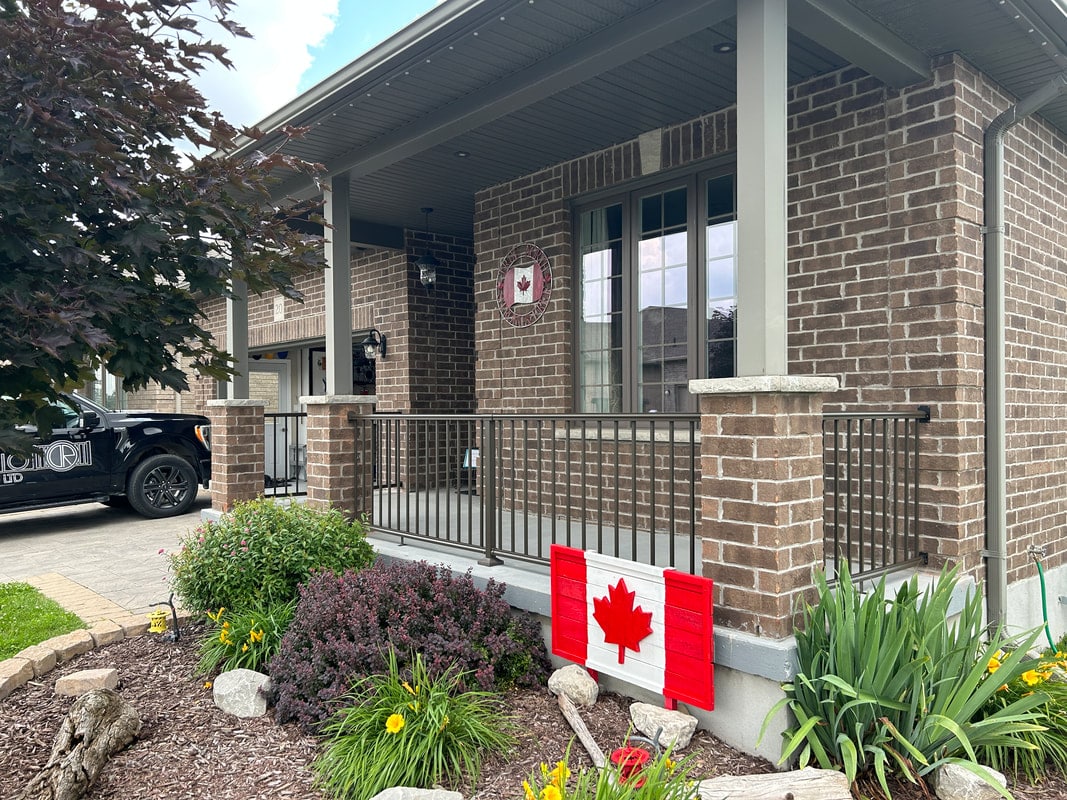
Look at the house from the street as well as from the deck. A rail detail may relate to the porch columns, window frames or brickwork even when it does not match the decking material. Matching everything is one approach, not the only approach.
Our picket railing, Stop N Go and Mid Rail pages show different aluminum directions. DekSmart’s custom-options page provides manufacturer finish and profile references; confirm applicability and review a physical sample.
If the grain and feel of timber are central to the design, acknowledge that preference rather than trying to describe coated metal as identical. If your priority is coordinating with existing trim while reducing finish work, compare appropriate aluminum examples against a photograph of your home.
For more visual choices, the deck railing ideas guide compares the view, the outline and the way different railing styles fit the setting.
Replacing an existing railing: plan the support first
Switching from wood to aluminum is a replacement project, not simply a change of colour. The proposed post positions, fastening and supporting surfaces need to be considered together. Existing holes or posts do not establish that a new system can use the same attachment.


These supplied before-and-after photographs show how aluminum changes the outline of an entrance. They are not a wood-removal example or a material durability test. Use them to compare the visible design, then assess your own project separately.
For a timber deck, show the edge, the accessible supporting structure and the intended attachment area. For a concrete landing, include clear photos of the proposed post locations. Mark anything that will remain after the existing railing is removed.
A different mounting arrangement may change the work needed. The deck railing installation page explains the planning conversation for supply and installation. Agree who is responsible for removal, repairs and preparing the supporting structure before the work starts.
Include the stairs in the material decision
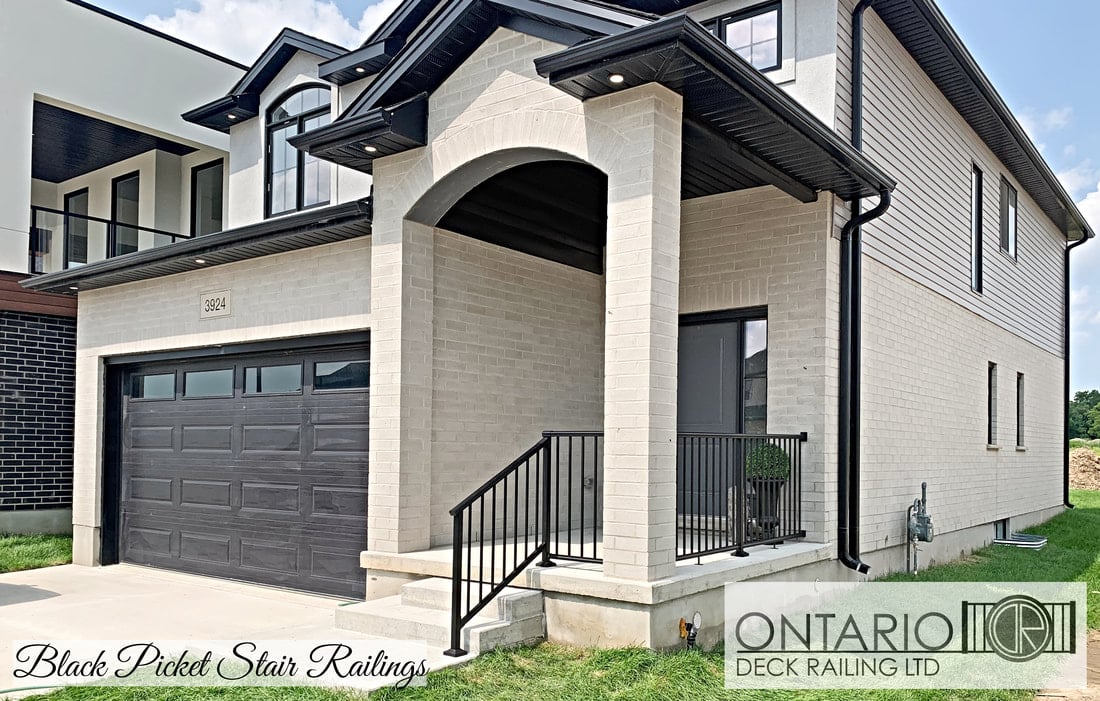
Deck stairs have a slope, transitions and landings that differ from a level perimeter. Compare the appearance along the full route, not just the railing beside the seating area.
Ask how the stair railings will meet the deck and how any required handrail is addressed. A guard and a handrail serve different purposes. Choosing aluminum or wood alone does not resolve those details.
Our outdoor stair railing page helps you consider that route. The Ontario railing height guide discusses the building and site information that affects requirements. Neither an attractive photograph nor a material label establishes compliance for your project.
Which choice fits your priorities?
Put aluminum on your shortlist if reducing wood-finish upkeep is important, you like the available metal profiles and you want a coordinated picket appearance around a deck, porch or staircase.
Keep wood in the comparison if natural grain, a custom timber detail or continuity with existing woodwork is essential—and you accept the care associated with the specified material and finish.
Before deciding, answer three questions: What appearance would I choose if the quotations were similar? Which care routine would I actually follow? What supporting or replacement work belongs in the project? Those answers help separate a personal preference from an incomplete cost comparison.
Ontario Deck Railing is based in London, Ontario. For an aluminum or glass enquiry, share your location, photographs, a simple layout and whether you need supply only or installation through the project enquiry form. Describe any existing wood railing and what you plan to retain, so the scope can be discussed.
Aluminum versus wood deck railing FAQs
Is aluminum deck railing worth it?
It is worth comparing if you like the appearance and want to reduce recurring wood-finish work. Judge the complete quotation and care requirements against your priorities. There is no verified universal payback period or resale increase for every project.
What are the downsides of aluminum railings?
You are choosing from the profiles and finishes available for the proposed system rather than the same customization possibilities as site-built wood. Coated surfaces can still need attention, and connections require inspection. Compare those considerations with the look and upkeep you want.
Are wood railings always cheaper?
No general rule establishes the finished cost of your project. Lumber, detailing, preparation, finishing, removal and installation all affect a wood quotation. Compare the same layout and stage of completion with the proposed aluminum system.
Does aluminum railing need maintenance?
Yes. Lower refinishing needs do not remove cleaning and inspection requirements. Follow the supplied manufacturer instructions for coated surfaces, connections and any other components. Ask for guidance if parts are damaged or movement is observed.
Can aluminum railings go on a wood deck?
An aluminum system may be proposed for a timber deck, but the actual supporting structure, post positions and attachment details must suit that system. Deck boards alone do not establish the required support, and old post locations should not be assumed reusable.
Do I have to replace the entire deck to change the railing?
The railing and the deck surface are separate parts of the project. Whether the existing structure can remain depends on its condition and the proposed attachment. Ask for a scope that distinguishes railing replacement from any necessary supporting or surface work.
Can I mix wood posts with aluminum railing components?
Only consider combinations designed or specifically accepted for that arrangement. A similar dimension or colour does not establish compatibility. Confirm the proposed posts, fittings, fastening and instructions before ordering mixed components.
Does Ontario Deck Railing offer wood railings?
This article discusses wood as a comparison material. ODR’s website presents aluminum and glass railing systems. Contact the team about those options and the scope of your replacement project rather than assuming this guide adds a wood product offering.
